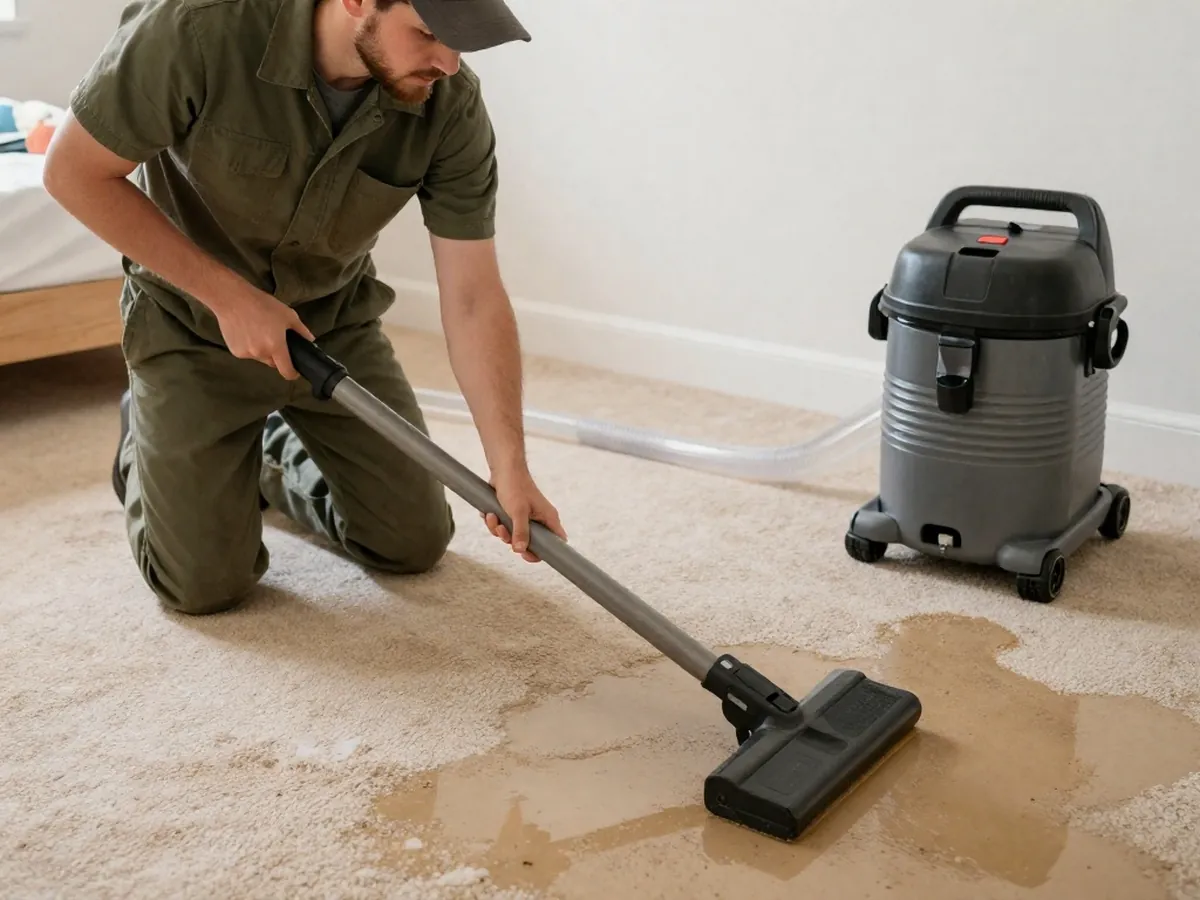
Carpet and the pad beneath it
Texas A&M AgriLife's flood guidance recommends replacing carpet and says the pad is always discarded. FEMA tells people to discard carpeting and mattresses that touched flood water. EPA adds that sewage or contaminated water can put porous materials, carpet among them, beyond saving.
Boards, plywood and the floor underneath
Texas A&M AgriLife suggests lifting a board in a wood floor every few feet so moisture can escape, and says swollen plywood or OSB subfloor gets replaced. The guide leaves the call on each floor to the person reading the moisture.
Drywall and plaster
Mississippi State's wall guide says submerged drywall cannot be saved, and Texas A&M AgriLife says flooded drywall is discarded. Pennsylvania's environmental agency describes wet drywall as fragile enough to crumble at a bump. Mississippi State adds that a soaked wall may need weeks or even months to dry out, with 4 to 6 weeks as the shortest wait before plaster repair or paint.
Insulation in walls and above ceilings
Wet fibrous insulation is discarded, Texas A&M AgriLife says. Mississippi State explains why: fiberglass batts block airflow and keep the framing from drying. For ceilings, Pennsylvania's agency says to remove the insulation above so the framing can dry, and that swollen or pulled-away ceiling drywall needs replacing.
Ceiling tiles and other porous finishes
EPA lists ceiling tiles and carpet as porous materials that may have to be thrown away. Its rule of thumb for mold is that a patch under about 10 square feet may be a homeowner's job, while larger or contaminated areas call for a professional.
Mattresses, upholstery and everything in the room
The CDC's guidance for flooded homes comes down to a short rule: when in doubt, throw it out. That covers doubtful food and drink as well as belongings that cannot be cleaned thoroughly. FEMA names mattresses specifically.
Ducts and the heating and cooling system
EPA advises against running an HVAC system that may have taken in contaminated water. After a flood, the CDC wants the system checked and cleaned by someone with mold-cleanup experience before it is switched on.
What no guide can decide for your house
These are general guides, and most were written for flooding rather than a single leak. A contractor reads the moisture in each layer of your own house. Whether a policy pays for any of it is the insurer's decision, and photographs taken before anything moves help both conversations.